 Call or Text us for a FREE Estimate.
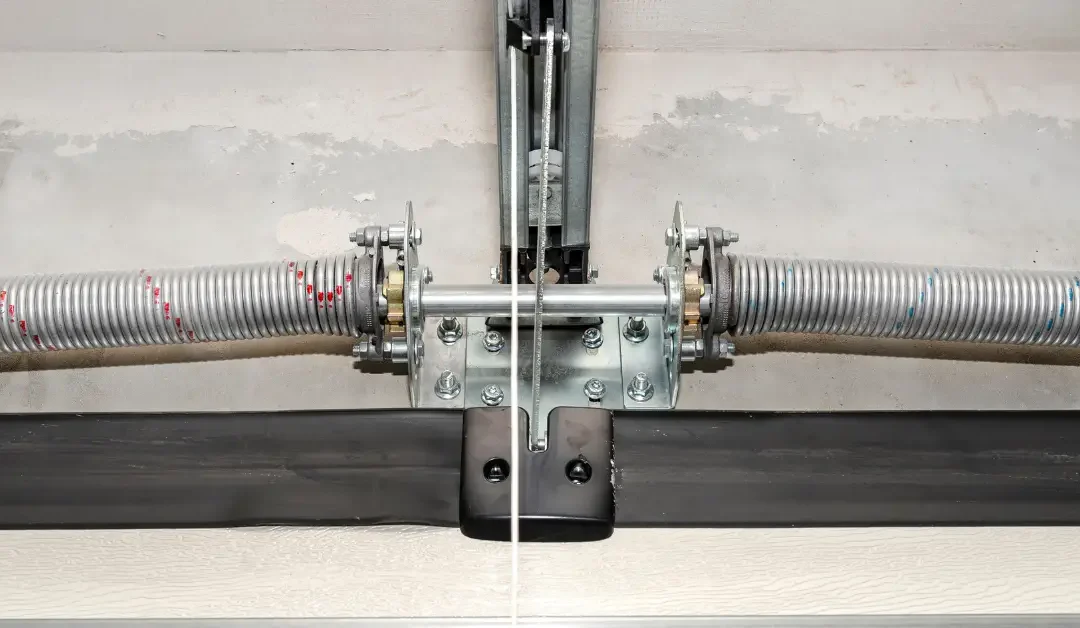
As strange as it sounds, one of the most important parts of a garage door is the humble spring. Springs function as counterweights, providing the strength needed to “pull” your garage open while also storing that potential energy when your garage is closed. There are two main types of springs used in garages: torsion springs and extension springs. Although they may look similar, the differences between them could mean the difference between a functional garage door and a broken one. RKS Doors has experience with both types of springs, and we want to share that knowledge with you.
Torsion Springs
Torsion springs are small springs with two metal “legs”. These springs are directly connected to your garage’s counterbalance, usually directly above the door. As the door closes, torsion springs are twisted and wound up, building up potential energy. When the door starts to open, the torsion springs release their stored energy as they unwind, pulling the door upwards at a smooth, steady pace.
Extension Springs
Extension springs are longer springs with two hooks at each end, like those found on trampolines. Extension springs are installed with one hook connected to the counterbalance and the other end attached to the distant rear track hanger. As the garage door closes, the extension springs stretch outwards to an incredible length. As the door opens, the spring pulls back to its original length, tugging the door along with it.
Differences Between the Springs
Torsion and extension springs have more differences than just their design and placement. Torsion springs tend to be more expensive than extension springs due to their more complex design. They also have a more complicated installation process compared to extension springs, which can just be hooked to different points. However, torsion springs have a much longer lifespan than extension springs, and do not need to be replaced as often. Torsion springs also offer smoother, more controlled movement, while extension springs lack the precision needed to raise your garage door consistently.
What Springs Should You Use?
Torsion and extension springs are both used in garage doors, but their purposes differ. Generally, torsion springs are the best option for most garage doors. Despite their higher cost, they last longer, take up less space, and provide a smoother door-opening experience. However, extension springs are cheaper and easier to install, and can be very effective for sectional garage doors in particular. Despite their differences, both spring types will eventually wear down and require replacement. These springs store large amounts of energy and could snap off, causing damage and even physical harm if removed improperly. RKS Doors can help you maintain your garage doors and keep them running smoothly, no matter what type of spring you use.